
I recently did a Seminar Q&A on Type 2 diabetes and prediabetes, and I wanted to share a simple way to understand what’s going on – and how small habits can make a big difference.
After all, if you understand what’s going on, it can sometimes help to motivate us to do the thing we know we need to do (as what you do today can impact you right now… and it’s difficult to remember that in the moment so you opt for the short term gratification of putting off the healthy habits you know you need to do).
From working in public health, NHS and doing postgrad research on low calorie diets, and insulin resistance (which is at the root of most Type 2 diabetes, you may have noticed I’m quite passionate about this stuff. But don’t worry – no jargon. I’ll try to make this easy to understand ..
With a picture here to go with the explanation..
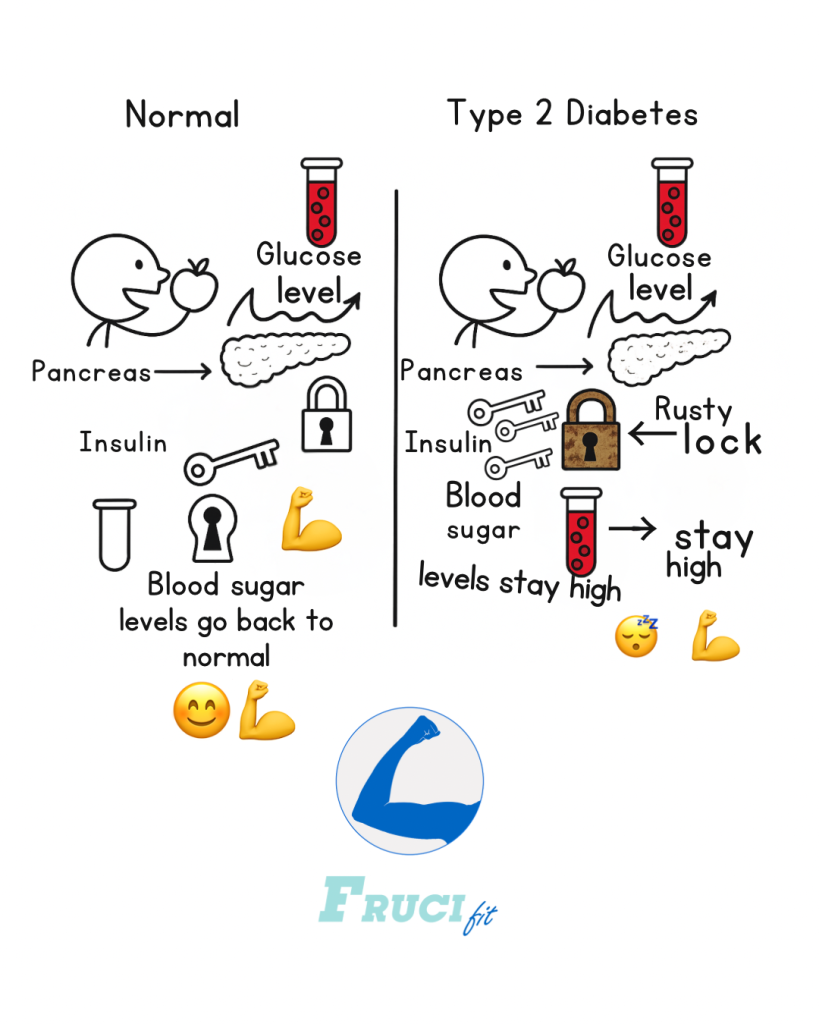
You eat an apple (or a biscuit), and glucose (sugar) enters your bloodstream. Your body then calls on insulin – a hormone released by your pancreas – which acts like a key to unlock the door to your cells (like your muscles), letting the sugar in to be used as energy.
In someone without Type 2 Diabetes, this works perfectly. The sugar gets in, energy levels are steady, and life goes on. isn’t the human body amazing?
But in someone with Type 2 diabetes or prediabetes… that lock on the door? It’s rusty.
The keys (insulin) are still being made, because the blood sugar levels stay high an the feedback loop to release more insulin continues. However, the lock just doesn’t turn as easily. The sugar stays in the bloodstream, and this causes issues – fatigue, frequent urination, slow healing, nerve problems, and more over time…even amputation if left untreated…
Now here’s the good news:
Exercise = WD-40 for that rusty lock.
Yup, movement helps your cells become more sensitive to insulin. It helps the glucose get where it needs to go. It literally helps the lock turn again.
You don’t need to run marathons or spend hours in the gym. Even:
- A short walk after meals
- Standing up during adverts or between meetings
- A few squats while the kettle boils
These small things add up. They are the WD-40.
And when paired with dietary changes – like reducing ultra-processed foods or lowering calories – it becomes even more powerful, whether that’s increasing fibre, reducing sugar, or fat..
In fact, research shows that losing just 5–7% of your current weight can improve blood sugar control. Losing around 15% can even reverse diabetes in some cases.
^^ this is where the 800 calorie diets and similar come in. We have our Shape Up Shift plan at Fruci Fit which works really well with this.
But again – it’s not all-or-nothing. Every little helps.
So if you’re ever wondering, “What’s the point?” — just remember:
Every time you move, you’re helping your body use sugar better.
Every time you eat well, you’re helping your pancreas breathe a sigh of relief.
And every little win gets you closer to unlocking that rusty door.
And it might just give you more energy along the way.
One small habit at a time.
If you’ve got questions, or you want support on where to start with this – just hit reply.
if you want to listen to the full Seminar Q and A I did on this? Message me with “Diabetes” and I’ll send it over
Matt